About The Artists

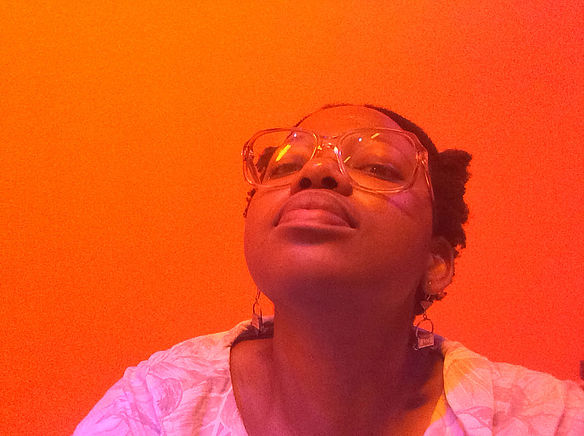
Dineo Seshee Bopape was born in 1981, on a Sunday. If she were ghanain, her name would be akosua/akos for short. During the same year of her birth, the Brixton riots took place; two people were injured when a bomb exploded in a Durban shopping center; Bobby Sands dies; Umkonto We Sizwe performs numerous underground assaults against the apartheid state. There was an earthquake in China that killed maybe 50 people; an International NGO Conference on Indigenous Populations and the Land is held in Geneva; Hosni Mubarack was elected president of Egypt; there is a coup d'etat in Ghana; princess Diana of Britain marries Charles; Bob Marley dies; apartheid SA invades Angola; Salman Rushdie releases his book "Midnight's Children"; the remains of the Titanic are found; Muhamed Ali retires; Winnie Mandela's banishment orders are renewed for another 5 years; the first test tube baby is born; Thomas Sanakara rides a bike to his first cabinet meeting; Machu Pihu is declared a heritage site; the song "endless love" is popular on the airwaves; her paternal grandmother dies affected by dementia; that very year millions of people cried tears(of all sorts), spoke words in many languages and billions of people dreamt.... The world's human population was around 4.529 billion... today Bopape is one amongst 7 billion - occupying multiple adjectives. Her intuitive installations transform spaces into meditative arenas in which historical narrative, fiction, and personal narrative are wittingly interwoven in order to reveal the subjective conditions of being alive

Bopape is known for her experimental video montages, sculptural installations, paintings and found objects. She graduated at De Ateliers in Amsterdam (2007) and completed an MFA at Columbia University, New York (2010). She is the winner of the Future Generation Prize (2016), and the recipient of Columbia University's Toby Fund Award (2010). Her work has been featured in solo exhibitions at Collective Gallery, Edinburgh (2018); Sfeir-Semler Gallery, Hamburg (2018); PinchukArtCentre, Kiev (2018); Art in General, New York (2016); Palais de Tokyo, Paris (2016); Hayward Gallery, London (2015); Hordaland Kunstsenter, Bergen (2015); August House, Johannesburg (2014); Stevenson Gallery, Cape Town (2013, 2011); and Mart House Gallery, Amsterdam (2010). Her work has also been included in group exhibitions at the Marrakech Biennale 6, Marrakech (2016); La Biennale de Montréal (2015); Bienial de São Paulo (2016); Tate Modern, London (2015); Center for Visual Art, Denver (2015); Institute of Contemporary Arts, London (2015); The Jewish Museum, New York (2015); Institute of Contemporary Art, Philadelphia (2014); Tropenmuseum, Amsterdam (2014); and Biennale de Lyon (2013).
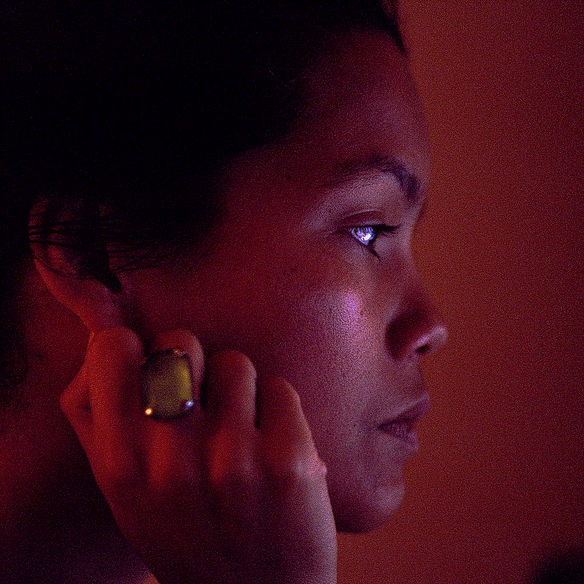
Tracy Rose belongs to a generation of artists charged with reinventing the artistic gesture in post-Apartheid South Africa. Within this fold, she has defined a provocative visual world whose complexities reflect those of the task at hand. Refusing to simplify reality for the sake of clarity, the artist creates rich characters that inhabit worlds as interrelated as the many facets of a human personality. Her reference to theatre and the carnival tradition also places her work in the realm of satire. As such, it has consistently questioned and challenged the prevalent aesthetics of international contemporary art, the emergence of a dominant cultural narrative of struggle and reconciliation in South Africa and also post-colonial, racial and feminist issues in the wider world. Working with performance, often for the camera, Tracey Rose places her body at the center of her practice. She inhabits the roles given to Africans, to African women, and to women in a male dominated world, swallowing stereotypes whole. In her quest to understand the source of these cultural meanings that define the human condition, Rose is inevitably led to religious myths of creation. The scope of Rose's work is not limited to the boundaries of South Africa, and it has indeed quickly found a global, humanist resonance

Rose holds a Master of Fine Art from Goldsmiths College, University of London (UK) and received her B.A. in Fine Arts from the University of the Witwatersrand, Johannesburg in 1996. She was trained in editing and cinematography at The South African School of Motion Picture Medium and Live Performance in Johannesburg. When Rose graduated in Fine Arts in 1996, her career almost immediately took off with high profile exhibitions that included Hitchhiker at the Generator Art Space, Johannesburg (1996); the Johannesburg Biennial (1997); Cross/ings at the University of South Florida Contemporary Art Museum (1997) and Harald Szeemann's Plateau de l'Humanité at 49th Venice Biennial (2001). More recently Rose has had solo exhibitions at The Project, New York; Goodman Gallery, Johannesburg; Moderna Museet, Stockholm; Doualart, Douala; The Johannesburg Art Gallery, Johannesburg; Bildmuseet, University of Umea, Umea; Nikolaj Kunsthal, Copenhagen; Dan Gunn, Berlin and Museo Reina Sofia, Madrid.

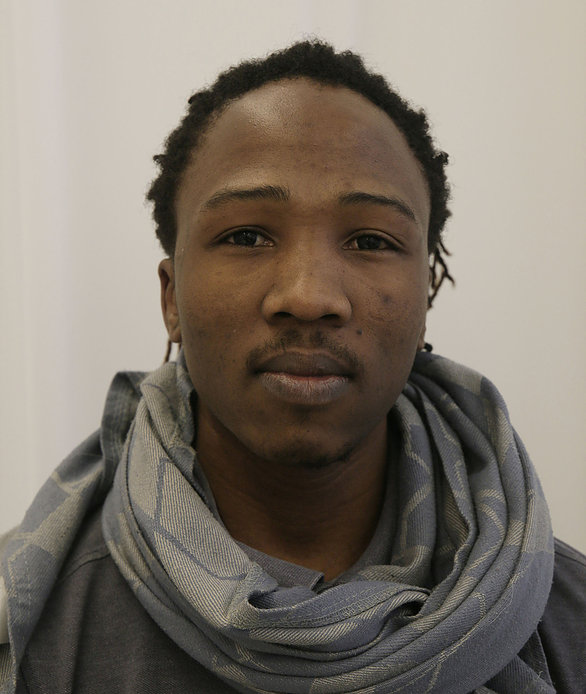
Mawande Ka Zenzile was born in Lady Frere, Eastern Cape. He gained a BA Fine Art from Michaelis School of Fine Art, University of Cape Town, in 2014, where he is currently completing his MA Fine Art. He won the Tollman Award for Visual Art in 2014 and the Michaelis Prize in 2013. His work has been shown in numerous solo and group exhibitions.

Residencies have taken place in Dar es Salaam, Tanzania (2014) and Norway (2008). Ka Zenzile has participated in academic conferences at institutions including the Michaelis School of Fine Art and Hochschule für Bildende Künste Braunschweig (2013); the Gordon Institute for Performing and Creative Arts, University of Cape Town (2012) and the Centre for African Studies, University of Cape Town (2011). Many of these projects have been accompanied by performances.

Ka Zenzile works in a variety of mediums including painting, sculpture, installation and video. His subject matter derives from various sources, including but not limited to his own IsiXhosa modality, questions around ontology, popular imagery as well as socio-political and esoteric knowledge. He has stated 'Through my work, I engage with politics, memory, violence, history, colonial legacies, and the notions of space and time. I constantly aim to negate stereotypes imposed on my work. Each and every artistic process I engage with is a continuous deconstruction of the ideologies and limitations I find imposed on me by the world.'

Combining mud, cow-dung with conventional materials in his work, Ka Zenzile challenges the component parts of hegemonic systems of thought as well as the assumptions underlying economic systems, political ideologies and various concepts which constitute the 'norm'.